
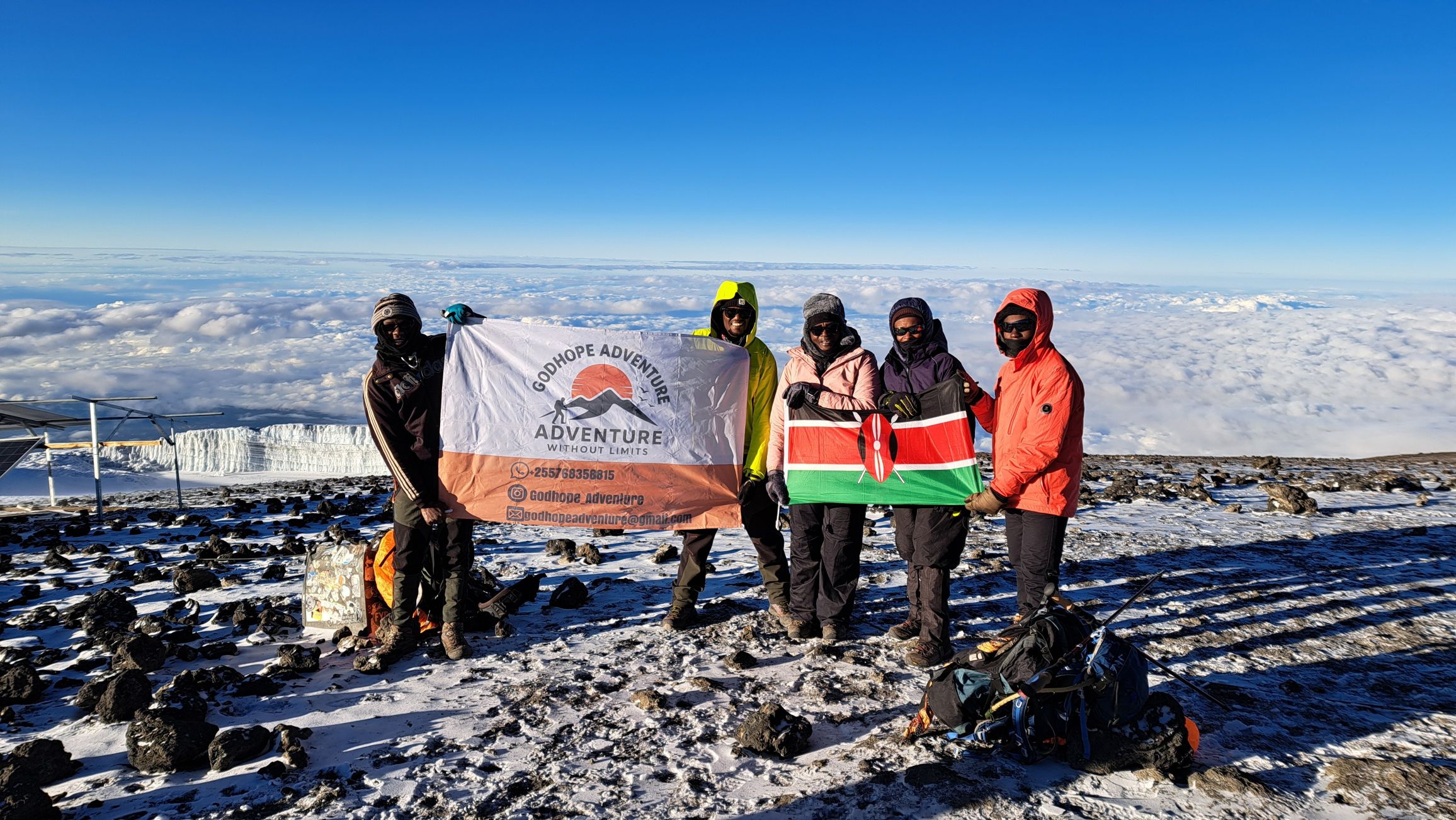
500+
Kilimanjaro Summits
85%
Summit Success Rate
12
Years in the Field
2,000+
Guests Guided
Climbing Routes
Choose your route
![[Placeholder package image — real package catalog required from client]](https://godhopeadventuretz.com/storage/images/package_card_placeholder-lemosho-climb.jpg) Climbing
Climbing
8 Days
Lemosho Route Climb
Kilimanjaro
From $2,500
![[Placeholder — Marangu Route package image]](https://godhopeadventuretz.com/storage/images/packages/package_card_marangu-route-climb.jpg) Climbing
Climbing
6 Days
Marangu Route Climb
Kilimanjaro
From $2,300
![[Placeholder — Rongai Route package image]](https://godhopeadventuretz.com/storage/images/packages/package_card_rongai-route-climb.jpg) Climbing
Climbing
7 Days
Rongai Route Climb
Kilimanjaro
From $2,600
![[Placeholder — Northern Circuit package image]](https://godhopeadventuretz.com/storage/images/packages/package_card_northern-circuit-climb.jpg) Climbing
Climbing
9 Days
Northern Circuit Climb
Kilimanjaro
From $2,800
![[Placeholder — Umbwe Route package image]](https://godhopeadventuretz.com/storage/images/packages/package_card_umbwe-route-climb.jpg) Climbing
Climbing
6 Days
Umbwe Route Climb
Kilimanjaro
From $2,300
![[Placeholder — Machame Route package image]](https://godhopeadventuretz.com/storage/images/packages/package_card_machame-route-climb.jpg) Climbing
Climbing
7 Days
Machame Route Climb
Kilimanjaro
From $2,400
![[Placeholder — Mount Meru Ascent package image]](https://godhopeadventuretz.com/storage/images/destination_arusha_np.jpg) Climbing
Climbing
Mount Meru Ascent
Arusha National Park
From $1,100
Five Worlds, One Mountain
The ecological zones of Kilimanjaro
![[Placeholder — cultivation zone photography required]](https://godhopeadventuretz.com/storage/images/packages/climbing/route_zone_1.jpg)
800m – 1,800m
Cultivation Zone
The trek begins among farmland and villages at the mountain's base, where the climate is warm and the terrain gentle.
![[Placeholder — forest zone photography required]](https://godhopeadventuretz.com/storage/images/packages/climbing/route_zone_2.jpg)
1,800m – 2,800m
Rainforest Zone
Dense montane forest, home to colobus monkeys and rich birdlife, with cooler air and frequent mist.
![[Placeholder — moorland zone photography required]](https://godhopeadventuretz.com/storage/images/packages/climbing/route_zone_3.jpg)
2,800m – 4,000m
Moorland Zone
Heather and giant lobelias give way to open moorland, with dramatic swings between hot days and freezing nights.
![[Placeholder — alpine desert zone photography required]](https://godhopeadventuretz.com/storage/images/packages/climbing/route_zone_4.jpg)
4,000m – 5,000m
Alpine Desert Zone
A stark, rocky landscape with little vegetation and thin air — acclimatization matters most here.
![[Placeholder — summit zone photography required]](https://godhopeadventuretz.com/storage/images/packages/climbing/route_zone_5.jpg)
5,000m+
Arctic Summit Zone
Rock, ice, and glaciers lead to Uhuru Peak — the roof of Africa.
Getting Ready
How to prepare for your climb
Build your fitness
Regular cardio and hiking with a loaded daypack in the months before your climb makes a real difference on summit day.
Break in your boots
Wear your hiking boots on multiple training walks beforehand — the mountain is the wrong place to discover a blister.
Pack in layers
Temperatures range from tropical heat at the base to well below freezing at the summit. Layered clothing lets you adjust as you climb.
Go slowly
On the mountain, a slow, steady pace ("pole pole" in Swahili) helps your body acclimatize and is the single biggest factor in reaching the summit.
Stay hydrated
High altitude increases fluid loss. Drinking regularly throughout each day's trek helps reduce altitude-related symptoms.
Talk to your doctor
A pre-trip medical check, including a conversation about altitude sickness medication, is worth doing well before departure.
Transparent Pricing
Choose your route and comfort level
Standard
Price available on request — contact us for current rates
Premium
Price available on request — contact us for current rates
Standard
Price available on request — contact us for current rates
Premium
Price available on request — contact us for current rates
Standard
Price available on request — contact us for current rates
Premium
Price available on request — contact us for current rates
Standard
Price available on request — contact us for current rates
Premium
Price available on request — contact us for current rates
Prices vary by group size and season. Get a personalized quote →
Questions